
Door-to-Door vs Terminal-to-Terminal Shipping: Pros & Cons
Vinmove Team
Author
July 8, 2026
Published
July 8, 2026
Updated
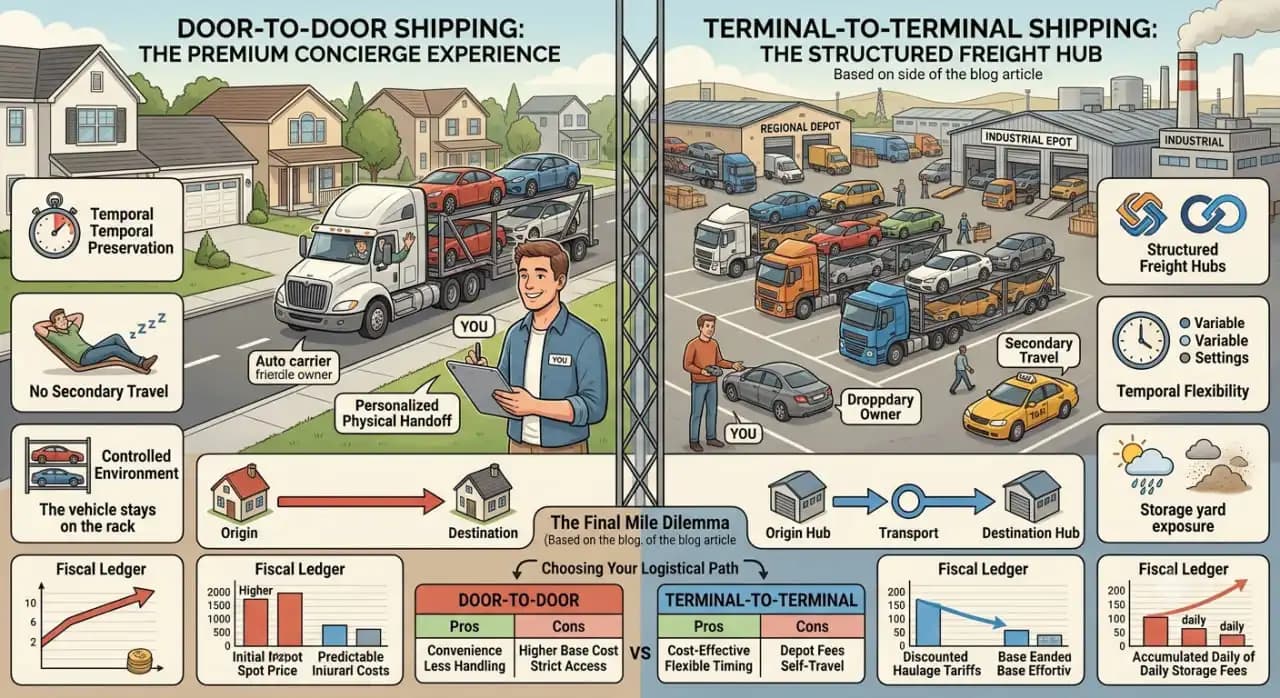
The Final Mile Dilemma: Deciphering Vehicle Transit Modalities
Shipping a vehicle across immense distances presents an intricate puzzle of logistics, cost, and personal convenience. At the heart of this decision lies a choice between two distinct transportation frameworks: door-to-door delivery and terminal-to-terminal transit. It is a balancing act that forces vehicle owners to weigh the luxury of direct service against the structured setup of centralized freight hubs.
Selecting the right vehicle transit path requires looking past simple convenience. To choose wisely, you must analyze how these two methods impact your schedule, your budget, and the safety of your automobile.
Door-to-Door Shipping: The Premium Concierge Experience
Door-to-door shipping stands as the pinnacle of convenience within the vehicle relocation marketplace. With this method, a massive auto hauler navigates as close to your specified origin and destination coordinates as legally and physically permissible. It eliminates the tedious need for secondary travel or complex handoff schedules.
+-----------------------------------+-----------------------------------+
| Advantages (The Direct Route)     | Limitations (The Narrow Lane)     |
+-----------------------------------+-----------------------------------+
| • Absolute temporal preservation  | • Elevated baseline tariff costs  |
| • Eliminates secondary travel needs| • Restricted by narrow urban zones|
| • Personalized physical handoff   | • Strict residential parking laws |
+-----------------------------------+-----------------------------------+
The greatest benefit of this approach is absolute temporal preservation. You bypass the stress of navigating unfamiliar transit terminals, handling the entire transfer right outside your home or office. However, this premium service does have its limitations. Residential neighborhoods with narrow lanes, low-hanging branches, or strict local parking ordinances can prevent an articulated multi-car trailer from reaching your exact curb, requiring a nearby meeting spot like a grocery store parking lot.
Terminal-to-Terminal Shipping: The Structured Freight Hub
Terminal-to-terminal shipping operates on a centralized hub-and-spoke infrastructure, mimicking traditional industrial freight networks. Under this framework, you are responsible for dropping off your vehicle at a designated regional storage facility and retrieving it from a similar depot at the destination.
Operational Reality: Utilizing a freight terminal introduces a two-step transit puzzle, requiring you to arrange your own secondary transportation to and from the storage yards.
While this method requires more effort from the owner, it offers unparalleled flexibility for your schedule. Rather than waiting around for a specific delivery window, you can drop off or pick up your vehicle whenever the facility is open. This makes it an ideal option for anyone dealing with unpredictable moving timelines or sudden delays.
The Fiscal Ledger: Auditing the Cost Differential
When it comes to the bottom line, terminal shipping is generally considered the more budget-friendly option. By consolidating multiple vehicles at a single location, carriers save on fuel and reduce the time spent navigating tight city streets, allowing them to offer lower base rates.
                 [THE FINANCIAL MATRIX]
                           │
         ┌─────────────────┴─────────────────┐
         ▼                                   ▼
   [Door-to-Door Costs]                [Terminal Costs]
   • Premium carrier dispatch fees     • Discounted base haulage tariffs
   • Fuel surcharges for urban routes  • Accumulating daily storage fees
   • Higher initial spot prices        • Secondary travel expenses
However, saving money with terminal shipping requires careful planning. Many depots charge daily storage fees if a vehicle sits on their lot past a specific grace period. If your arrival is delayed, these accumulation fees can quickly erase your initial savings, making door-to-door delivery the more financially predictable choice.
Risk Profiling: Security and Environmental Vulnerabilities
Every vehicle transit method carries its own unique risk profile. With door-to-door transport, your vehicle enters a highly controlled environment. Once it is loaded onto the trailer, it stays secured on the rack until it reaches its destination, minimizing the risks that come with frequent reloading.
-
Terminal Exposure: Vehicles sitting in regional depots face increased exposure to variable weather patterns, dust, and industrial debris.
-
Vandalism Hazards: Outdoor storage yards can carry higher security risks depending on the facility's fencing, surveillance, and monitoring protocols.
-
The Continuous Handling Risk: Moving cars on and off trailers at multiple hubs increases the statistical chance of minor cosmetic scrapes or transit abrasions.
If you are moving an exotic, classic, or high-value vehicle, the protective envelope of door-to-door shipping—especially when paired with an enclosed trailer—is essential for peace of mind.
The Ultimate Vector: Choosing Your Logistical Path
The final decision ultimately depends on your personal priorities, your budget, and the specific vehicle you are moving. If you are balancing a demanding schedule or moving a high-end automobile, the direct nature of door-to-door shipping easily justifies its higher price tag.
If you are focused on saving money, have a highly flexible schedule, and have a reliable way to travel to regional hubs, terminal-to-terminal shipping serves as a practical, cost-effective alternative. By matching your specific situation with the right transport method, you can ensure a smooth, stress-free relocation for your vehicle.
Related Articles
Continue reading with these related posts

Official Announcement: VINMOVE Team Update & New Email Domain
At VINMOVE, we are continuously evolving to serve our clients and logistics partners better.
Cost to Ship a Car From Florida to California (2026)
See 2026 rates to ship a car from Florida to California — open vs. enclosed pricing, transit times, and how to get an accurate quote from Vinmove.
Top 5 Things That Can Delay Your Car Shipment (And How to Handle It)
Handing over the keys to your beloved four-wheeled chariot can feel a bit like sending a kid off to college.