
Cost to Ship a Car From Florida to California (2026)
Vinmove Team
Author
July 29, 2026
Published
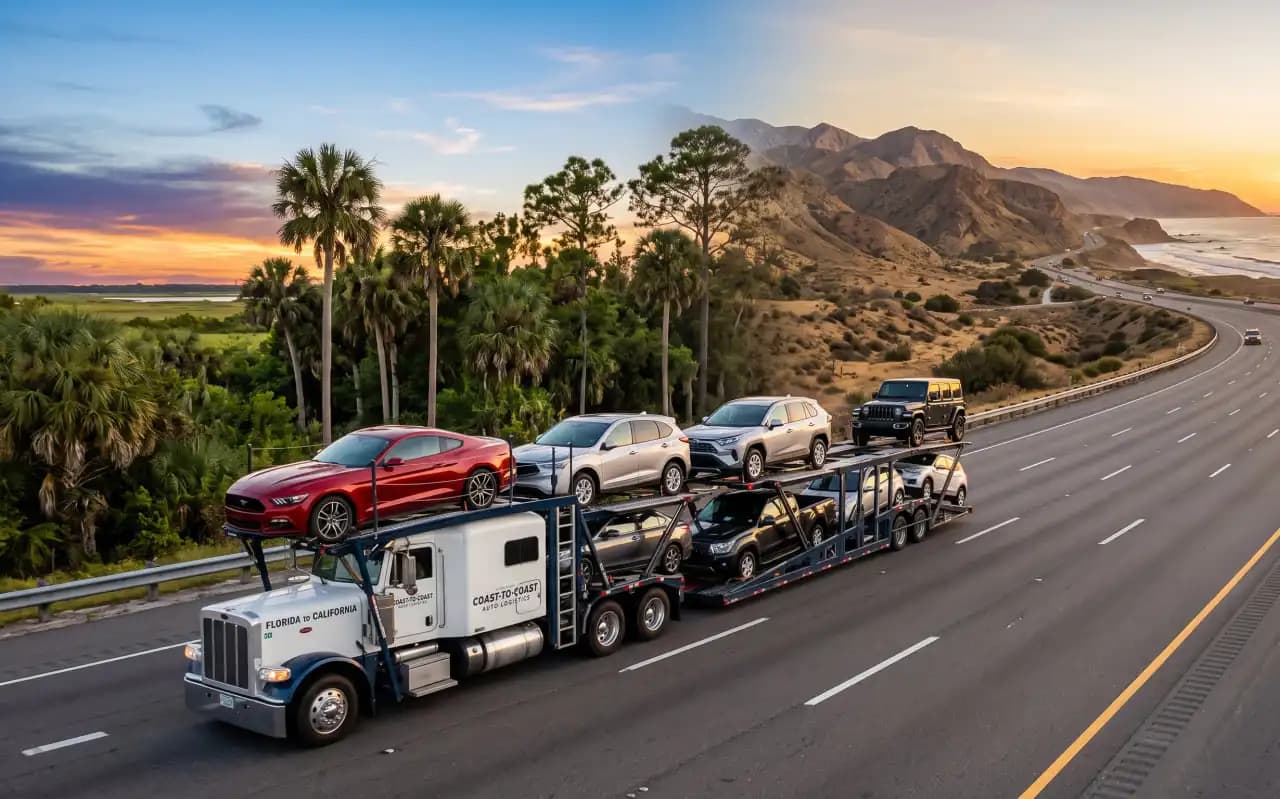
How Much Does It Cost to Ship a Car From Florida to California?
Shipping a car from Florida to California typically costs $1,050 to $1,550 for open transport, with enclosed transport running roughly 30–50% higher — usually $1,600 to $2,300+ depending on your vehicle and the time of year. This is one of the longest and most heavily traveled auto transport routes in the country, covering an average of 2,700 miles coast to coast.
Below, we break down exactly what drives that price, how long the trip takes, and how to get the best rate on your shipment.
Quick Answer
| Average distance | ~2,700 miles |
| Average transit time | 4–9 days (up to 10–14 for less common city pairs) |
| Open transport cost | $1,050–$1,550 |
| Enclosed transport cost | $1,600–$2,300+ |
| Cheapest time to book | Late spring / early fall (outside snowbird season) |
Cost by Popular City Pair
Exact pricing depends on your specific pickup and delivery cities, not just the states. Here's how some of the most common Florida-to-California routes typically break down:
| Route | Distance | Estimated Cost | Transit Time |
|---|---|---|---|
| Miami, FL → Los Angeles, CA | ~2,740 mi | $1,100–$1,400 | 4–9 days |
| Orlando, FL → Los Angeles, CA | ~2,510 mi | $1,050–$1,350 | 3–7 days |
| Tampa, FL → Los Angeles, CA | ~2,530 mi | $1,100–$1,350 | 3–7 days |
| Miami, FL → San Diego, CA | ~2,660 mi | $1,100–$1,400 | 4–9 days |
| Miami, FL → San Francisco, CA | ~3,050 mi | $1,250–$1,450 | 4–10 days |
| Jacksonville, FL → Los Angeles, CA | ~2,420 mi | $1,150–$1,375 | 3–7 days |
These are typical ranges — get an instant, vehicle-specific quote using Vinmove's calculator for an exact number.
What Determines Your Price?
Distance. Florida to California is one of the longest domestic auto transport routes at roughly 2,700 miles, which is the single biggest factor in the quote. Longer hauls mean more fuel and driver time, which shows up directly in the price.
Season. Prices climb during Florida's snowbird season (January through March), when demand for vehicle shipping into and out of Florida spikes. Booking a few weeks ahead of peak season — or shipping in the shoulder months of spring and fall — typically gets you a better rate.
Open vs. enclosed transport. Open transport is the standard, most affordable option and is what roughly 90% of vehicles ship on — the same type of trailer used to deliver new cars to dealerships. Enclosed transport fully covers your vehicle and costs 30–50% more, making sense for luxury, exotic, or classic cars.
Vehicle size and weight. A standard sedan costs less to ship than a full-size SUV or truck, since larger vehicles take up more trailer space and add weight.
Operability. If a vehicle can't reliably roll, steer, and brake on its own, it requires extra loading equipment, which adds to the cost.
Pickup and delivery location. Shipping to or from a major metro hub (Los Angeles, Miami, Tampa) is usually cheaper than a rural or hard-to-access address, since more carriers regularly travel busy corridors like I-10.
How to Save on This Route
Give your carrier a flexible pickup window — a 3-to-5-day window instead of a fixed date gives carriers more scheduling flexibility, which often translates into a lower rate. Booking 2–4 weeks in advance also helps, especially heading into snowbird season when carrier capacity tightens. If you're near a major hub city, offering pickup or drop-off there instead of a hard-to-reach residential address can open up more carrier options and better pricing too.
What to Know Before You Ship to California
California has stricter vehicle rules than Florida, so it's worth planning ahead. Vehicles typically need to pass a smog check and be registered within 20 days of establishing California residency, and new residents generally need a California driver's license within 10 days. Window tint limits are also stricter in California than in Florida, and minimum auto insurance requirements differ between the two states — it's worth double-checking your policy meets California's minimums once your car arrives.
Frequently Asked Questions
How long does it take to ship a car from Florida to California? Most shipments take 4 to 9 days, depending on the exact pickup and delivery cities and current carrier availability. Longer or less common routes can take up to two weeks.
Is open or enclosed transport better for this route? Open transport is the right choice for most standard vehicles and is significantly more affordable. Enclosed transport is worth the extra cost for luxury, exotic, or classic vehicles that need protection from road debris and weather over a long haul.
When is the cheapest time to ship a car from Florida to California? Outside of snowbird season (January–March), when Florida-bound and Florida-outbound demand is highest. Late spring and early fall tend to offer the best combination of price and carrier availability.
Do I need to be present for pickup and delivery? Yes — you or someone you authorize should be present at both ends to inspect the vehicle and sign off on its condition before and after transport.
Get an Accurate Quote
Every shipment is different — the fastest way to get an exact number for your vehicle is a free instant quote. Vinmove Auto Transport connects you with vetted, FMCSA-licensed carriers from our network of 30,000+ partners, with no upfront payment required until your carrier is confirmed.
[Get an Instant Quote] · Call (888) 551-6583
Related Articles
Continue reading with these related posts

Official Announcement: VINMOVE Team Update & New Email Domain
At VINMOVE, we are continuously evolving to serve our clients and logistics partners better.
Top 5 Things That Can Delay Your Car Shipment (And How to Handle It)
Handing over the keys to your beloved four-wheeled chariot can feel a bit like sending a kid off to college.
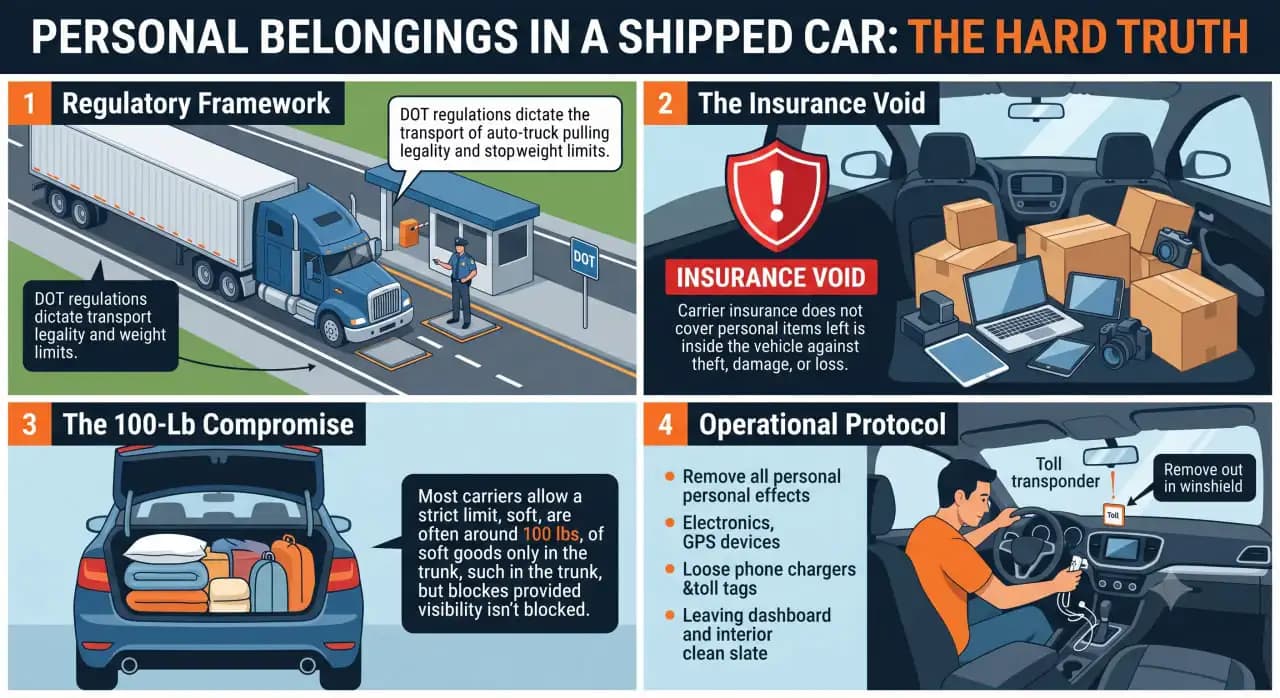
Can You Put Personal Belongings in a Shipped Car? (The Hard Truth)
When you face the massive task of packing up your entire life for a long-distance relocation, every cubic inch of packing space feels like gold.