
Can You Put Personal Belongings in a Shipped Car? (The Hard Truth)
Vinmove Team
Author
July 8, 2026
Published
July 8, 2026
Updated
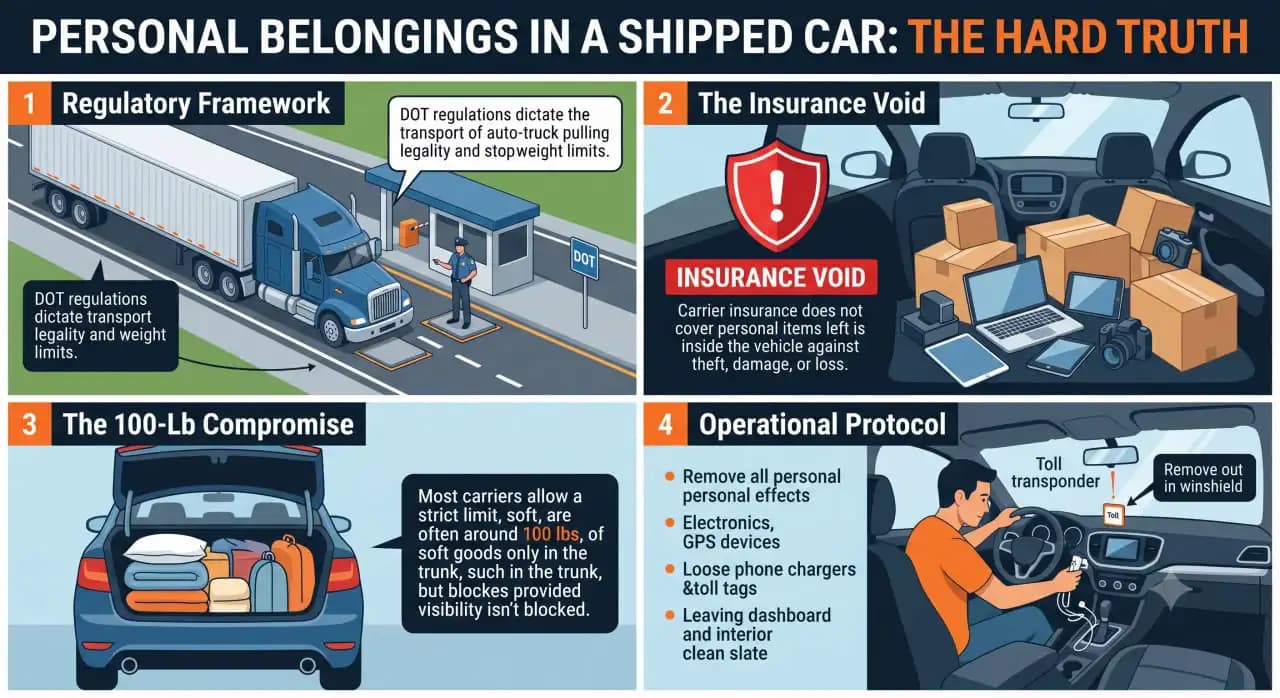
The Cabin Consolidation Temptation: Myth vs. Moving Reality
When you face the massive task of packing up your entire life for a long-distance relocation, every cubic inch of packing space feels like gold. It is incredibly tempting to eye that empty car cabin sitting on the transport trailer and treat it like an extra, rolling cardboard box. Why not cram the back seat full of winter coats, linens, or kitchen gear? It seems like a logical, space-saving hack.
However, the vehicle shipping grid operates under a strict system of rules and hidden liabilities. What looks like a harmless shortcut can quickly turn into a logistical headache at the loading dock.
The Regulatory Framework: FMCSA Guidelines and Weight Thresholds
The absolute restriction against packing your car with household goods is not just a stubborn policy invented by transport companies. It is deeply rooted in federal law. The Federal Motor Carrier Safety Administration (FMCSA) imposes strict weight limits on transport trailers to protect highway infrastructure.
+-----------------------------------+-----------------------------------+
| Truck Weight Enforcement          | Carrier Liability Realities       |
+-----------------------------------+-----------------------------------+
| • Mandatory DOT weigh stations    | • Household goods are uninsured   |
| • Heavy fines for over-weight rigs| • Risk of carrier fine transfers  |
| • Strict axle-weight distributions| • Delays from offloading demands  |
+-----------------------------------+-----------------------------------+
Every transport rig must pass through mandatory Department of Transportation (DOT) weigh stations along its route. If a truck exceeds its legal weight limit because a vehicle cabin is stuffed with heavy boxes, the driver faces massive fines and severe scheduling delays. Because of this, transport operators fiercely guard their weight allocations to ensure their trucks stay legal and on schedule.
The Insurance Void: High-Risk Deprivation of Coverage
If you decide to sneak your favorite golf clubs, high-end electronics, or designer clothes into your trunk, you are stepping into a total insurance void. The cargo insurance policy carried by an auto hauler is specifically designed to protect the vehicle itself, covering things like structural body damage or mechanical failures.
Insurance Reality: Auto transport cargo insurance provides absolutely zero financial protection for loose, personal items left inside the cabin.
If a dishonest parking lot attendant or a passerby spots your belongings and breaks a window to steal them, the loss is entirely your responsibility. Even worse, if those loose items shift during transit and damage the car's interior, the carrier's insurance will not pay a single cent for the repairs.
The Practical Compromise: The 100-Pound Threshold Exception
While the strict rules say your car should be completely empty, the industry does offer a small, unwritten compromise. Many direct carriers will allow you to pack a small amount of soft, personal items—usually capped right at 100 pounds.
                 [THE 100-LB STOWAGE ZONE]
                             │
         ┌───────────────────┴───────────────────┐
         ▼                                       ▼
   [Permitted Items]                       [Strictly Forbidden]
   • Linens, pillows, and blankets         • Heavy boxes and hard luggage
   • Off-season clothing bags              • Valuable electronics or tools
   • Soft, non-breakable goods             • Flammable materials or fluids
If a carrier grants you this exception, all items must be packed completely below the window line, preferably secured out of sight in the trunk. This keeps the driver's line of sight clear for loading and loading, and it ensures the trailer stays well within its strict legal weight limits.
The Operational Protocol: Preparing Your Vehicle for Hassle-Free Transport
To guarantee a smooth, stress-free shipping experience, treat your vehicle cabin like a clean slate before the truck arrives. Taking a few minutes to prep your interior protects your car and ensures the driver can accept it without any issues.
-
Complete Interior Clear-Out: Remove all personal items, chargers, loose change, and aftermarket GPS units from the cabin.
-
Remove Electronic Toll Tags: Take down your toll transponders to prevent them from accidentally scanning and racking up phantom charges as the truck passes through highway toll booths.
-
Secure Loose Trim Pieces: Fold in your side mirrors and remove or retract any custom exterior antennas to protect them from wind damage.
Leaving your car clean, light, and free of hidden clutter guarantees a smooth handoff. Your vehicle will sail through inspections and arrive safely at your new doorstep without any unexpected delays or fees.
Related Articles
Continue reading with these related posts

Official Announcement: VINMOVE Team Update & New Email Domain
At VINMOVE, we are continuously evolving to serve our clients and logistics partners better.
Cost to Ship a Car From Florida to California (2026)
See 2026 rates to ship a car from Florida to California — open vs. enclosed pricing, transit times, and how to get an accurate quote from Vinmove.
Top 5 Things That Can Delay Your Car Shipment (And How to Handle It)
Handing over the keys to your beloved four-wheeled chariot can feel a bit like sending a kid off to college.