
College Move-In Guide: Shipping Your Student’s Car Safely
Vinmove Team
Author
July 8, 2026
Published
July 8, 2026
Updated
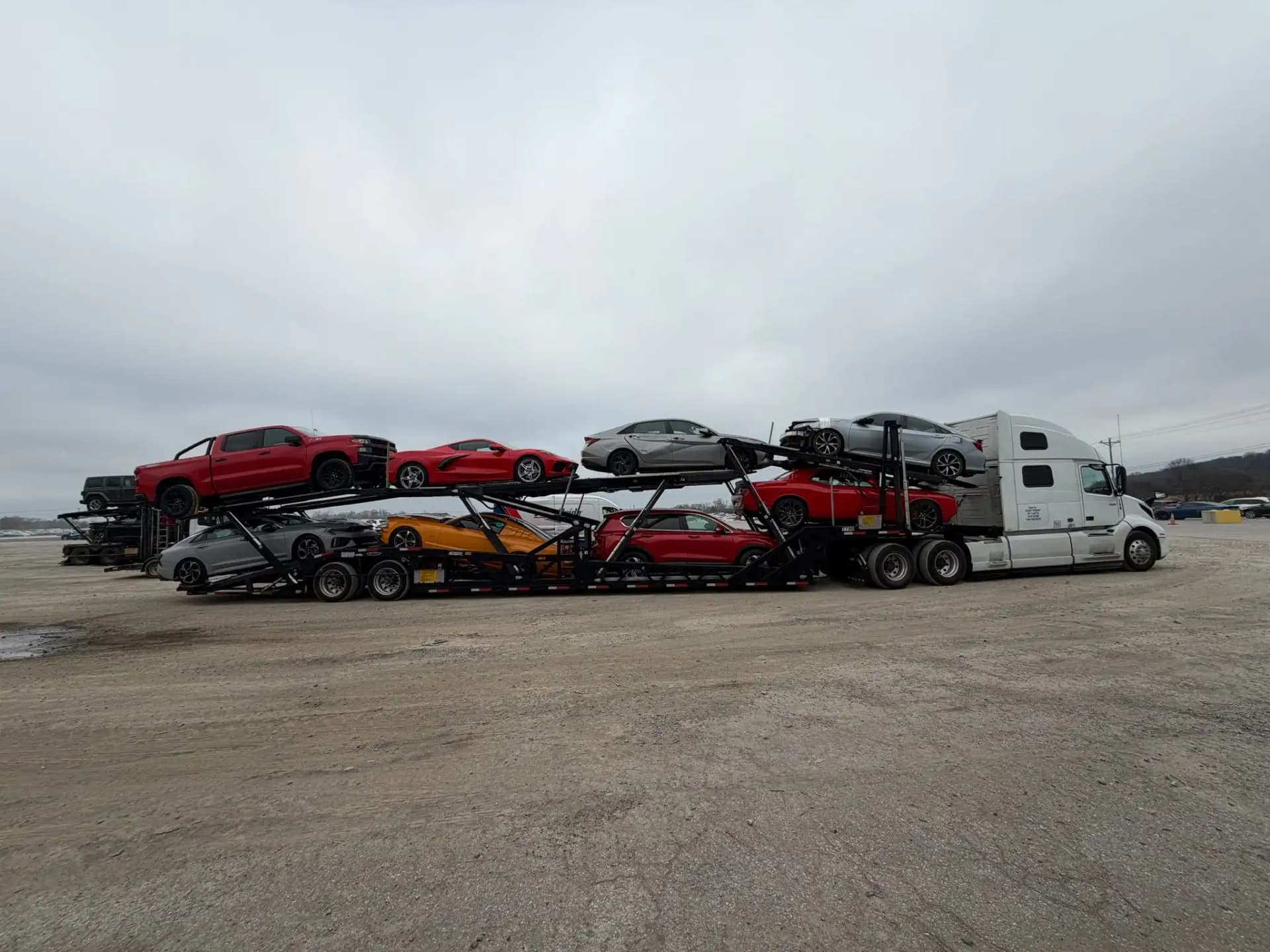
College Move-In Guide: Shipping Your Student’s Car Safely
The autumnal migration is upon us. Campuses across the nation are bracing for the annual influx of wide-eyed freshmen and seasoned upperclassmen alike. Amidst the cacophony of purchasing extra-long twin sheets and organizing textbook rentals, a looming logistical leviathan often remains: transporting the collegiate chariot.
Driving cross-country might seem like a quintessential rite of passage. It is also exhausting. Shipping your student's vehicle circumvents the deleterious wear and tear of a grueling multi-day road trip, preserving both the car's longevity and your sanity. Here is how to navigate the transit process seamlessly.
Deciphering the Auto Transport Labyrinth
Selecting a purveyor to haul your prized sedan isn't a decision to make on a whim. The automotive shipping industry is largely bifurcated into two distinct entities. You have brokers, and you have carriers.
Brokers act as the connective tissue. They do not own the trucks, but rather bid your shipment out to a vast, labyrinthine network of independent owner-operators. Carriers, conversely, own and operate the physical heavy-duty articulated lorries doing the actual hauling. Working directly with a carrier cuts out the middleman, though brokers often provide wider scheduling flexibility. Whichever route you select, seek out companies flaunting a transparent provenance. Verify their Federal Motor Carrier Safety Administration (FMCSA) credentials before committing a single cent. It saves monumental headaches down the road.
The Meticulous Pre-Flight Purge
Preparing the automobile for its cross-country sojourn demands meticulous attention. First, give the car a thorough, sudsy ablution. Dirt and road grime are masterful illusionists. They easily obfuscate pre-existing micro-abrasions or dents. Wash the exterior, dry it completely, and document the vehicle from every conceivable angle with high-definition photography.
Furthermore, ruthlessly excise all personal detritus from the cabin. It is incredibly tempting to utilize the trunk and backseat as auxiliary moving boxes. Resist this urge. The Department of Transportation enforces stringent, uncompromising weight regulations on auto transporters. Extraneous cargo can instantly void transit insurance policies, leaving your precious laptops and dorm room decor entirely unprotected against theft or damage.
Leave the interior a pristine, barren slate. Remember to unclip any toll transponders from the windshield. Failing to do so will result in a cascade of phantom toll charges as the transport truck traverses various state lines.
Decoding the Bill of Lading
Handover day is always a flurry of nervous activity. When the driver arrives, they will present you with a crucial piece of nomenclature known as the Bill of Lading. This document is far more than a mere receipt. It is the definitive anatomical map of your vehicle's current condition.
Perambulate the car alongside the driver. Scrutinize every panel, noting the most microscopic of blemishes, rock chips, or paint swirls. Take your time. Once you sign this initial manifest, you are legally binding yourself to its narrative. Precision here is absolutely paramount. Keep a carbon copy or a digital scan safely tucked away; you will need it for the final act of this logistical play.
Arrival at the Academic Enclave
The culmination of this transit saga occurs right on campus. When the transporter arrives at the collegiate milieu, do not succumb to the chaotic rush of move-in day excitement. The handoff requires focus.
Perform a secondary, rigorous inspection. Compare the freshly delivered vehicle against the initial Bill of Lading you retained from the pickup phase. Check the roof, the alloy wheels, and the undercarriage for any anomalous scrapes or structural compromises. Test the ignition. Only after confirming the car has survived its expedition completely unscathed should you provide the final authorizing signature.
Hand the keys over to your student. The open road of higher education awaits them.
Related Articles
Continue reading with these related posts

Official Announcement: VINMOVE Team Update & New Email Domain
At VINMOVE, we are continuously evolving to serve our clients and logistics partners better.
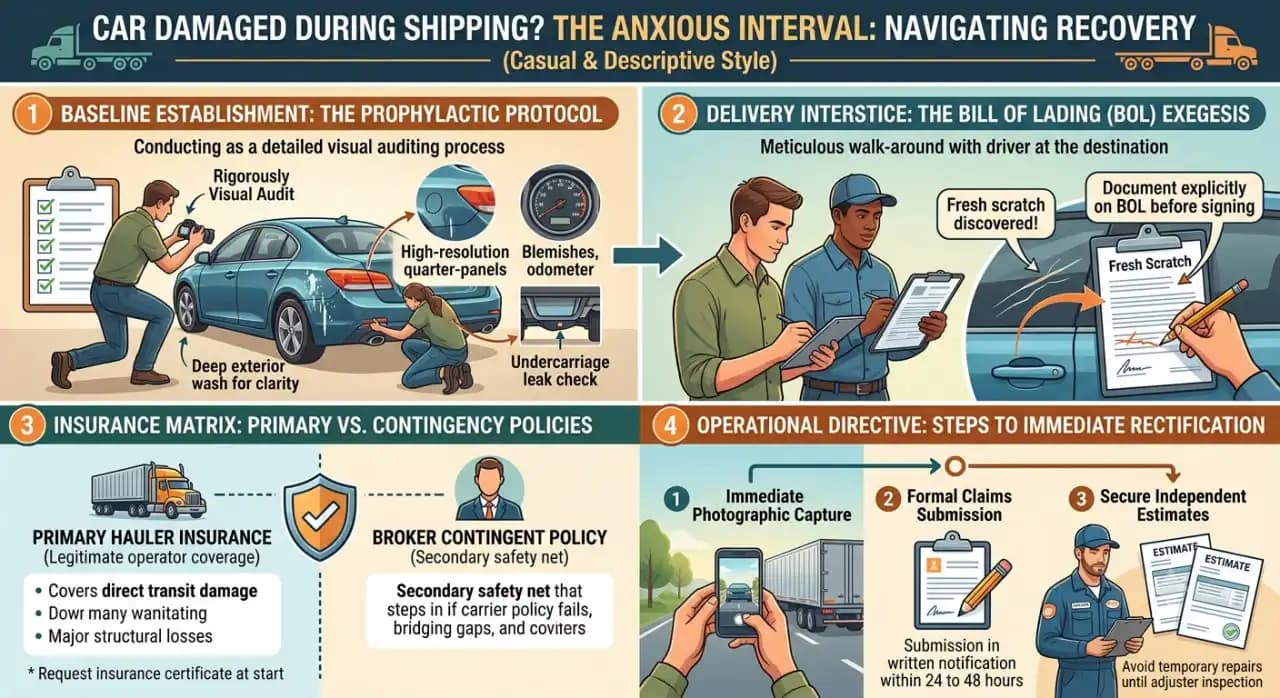
What Happens If My Car Is Damaged During Shipping?
Handing over the keys of a prized vehicle to an auto transport carrier can trigger a distinct sense of vulnerability.
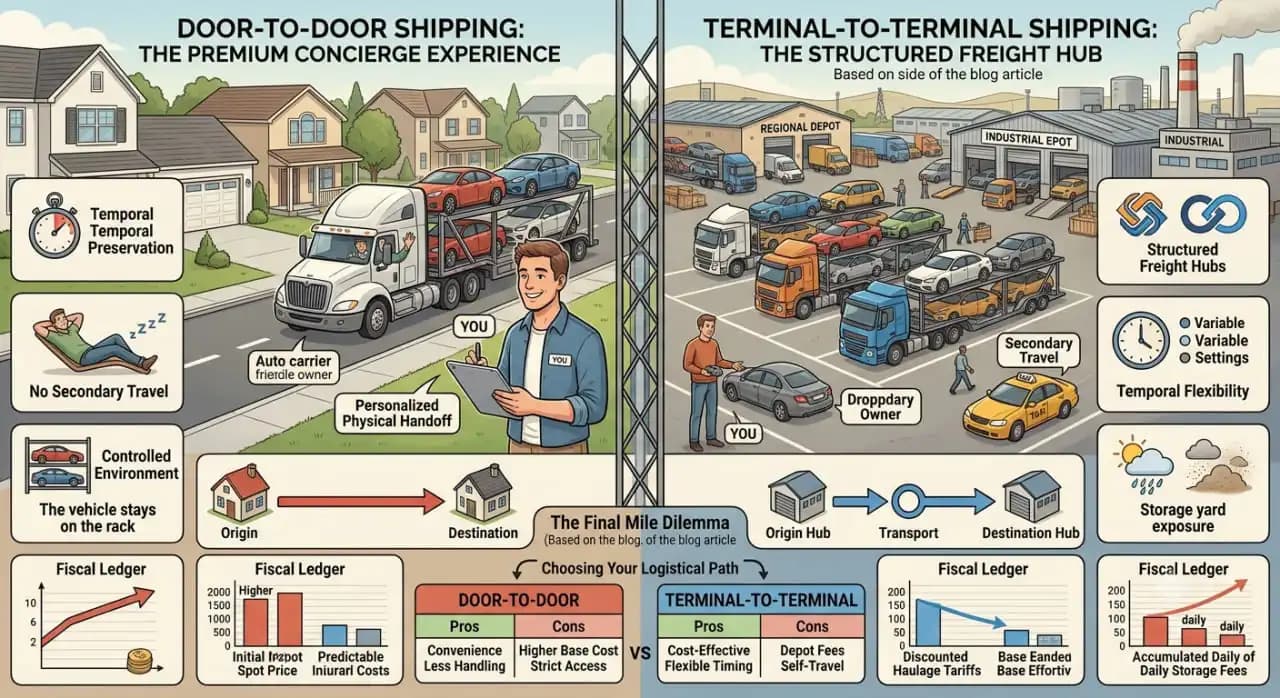
Door-to-Door vs Terminal-to-Terminal Shipping: Pros & Cons
Shipping a vehicle across immense distances presents an intricate puzzle of logistics, cost, and personal convenience.